
Written by Nelani Mejias.
This interview with Courtney Bryan was inspired by the NHSO’s concert, Montgomery Variations, which will take place on Sunday, November 2, 2025 at Woolsey Hall in downtown New Haven. Click here to learn more.
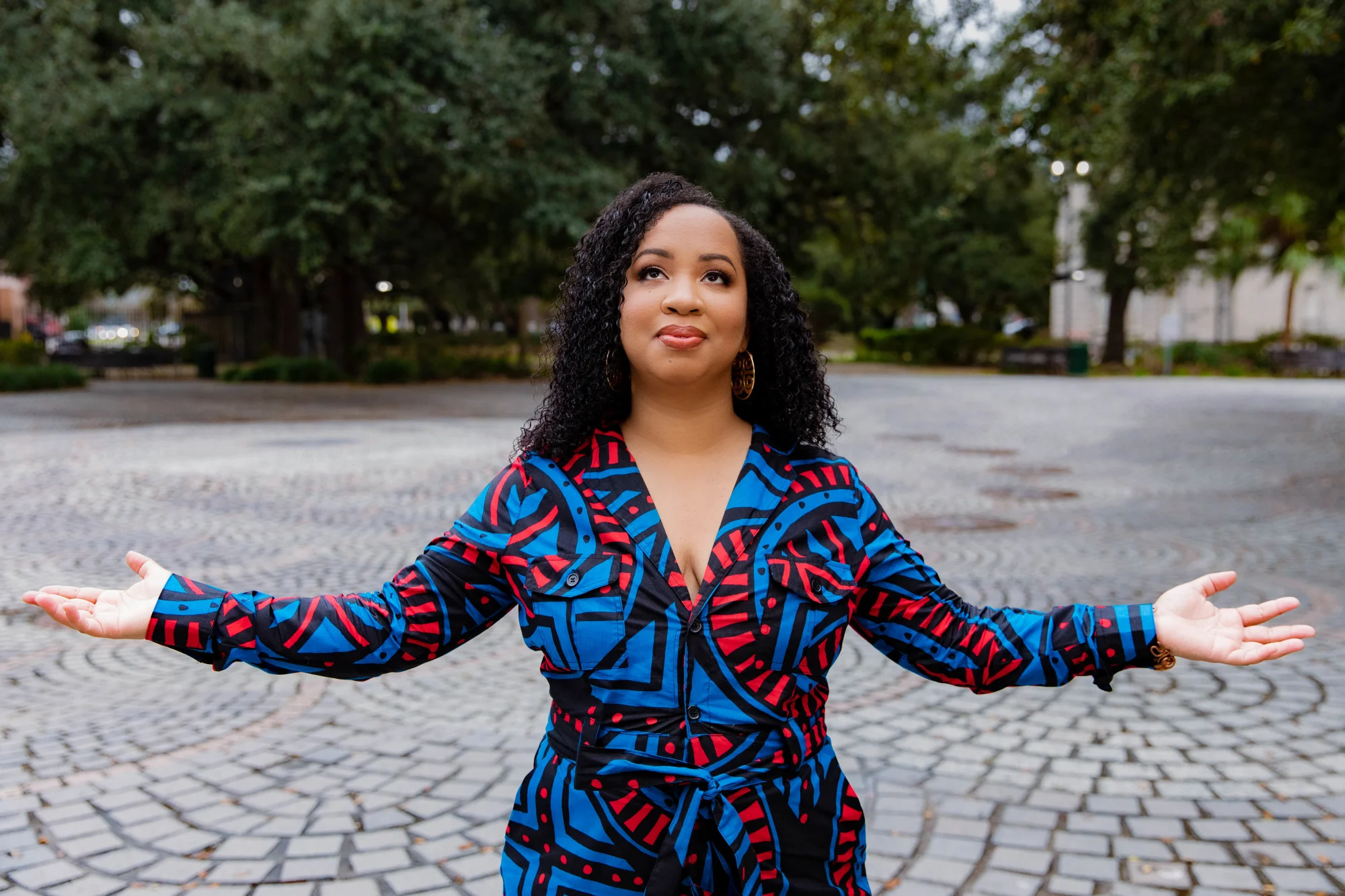
The New Haven Symphony Orchestra was able to speak with composer Courtney Bryan about her journey in music and composition. From climbing onto piano benches, to traveling to Europe, Courtney Bryan delves into her creative process in the music world along with her inspirations and how she hopes her work is received.
Courtney Bryan, a native of New Orleans, Louisiana, is “a pianist and composer of panoramic interests” (New York Times). She is a 2023 MacArthur Fellow, and currently serves as composer-in-residence with Opera Philadelphia. Bryan’s work has been presented in a wide range of venues, including Carnegie Hall, Lincoln Center, Miller Theatre, The Metropolitan Museum of Art, National Gallery of Art, Blue Note Jazz Club, Walt Disney Concert Hall, Isabella Stewart Gardner Museum, and the New Orleans Jazz and Heritage Festival.
In her role as Composer-in-Residence, she will compose original music for the NHSO and will work over the course of two years with advanced high school students in the NHSO’s Young Composer Project. She will also serve as a program curator for the Symphony. The NHSO will play two of her works this season: Sanctum and Visual Rhythms.
NHSO: I guess my first question for you would be, how were you first introduced to composing?
Courtney: The way I remember it was that I was small enough to remember I was climbing onto the piano bench. We had a piano at home, and both of my older sisters played piano and our mother played piano. It was important for her that they always had a piano in their house.
My parents had a piano in the house, so I just have these memories of just climbing up there and just playing around on the keys. I couldn’t wait until I was old enough to take piano lessons, so I started lessons at five. I was learning what you learn when you’re starting out piano, but I also was teaching myself how to compose. I didn’t really call it composing quite yet, and I didn’t really know what that was, but I would basically listen all the time like things that I heard on the radio or the TV and I would try to teach myself how to play it.
I was learning how to read music in the piano lessons and different things. So, a lot of times, whatever I was working on in my piano lessons, I would maybe do improvisations off of that. And then I’d come up with something new and then I would memorize it.
I kept doing this regularly so my parents eventually started recording what I was doing because I would say, “Here’s a song I made up.” I would take something that existed and improvise off of it, create something new, and then memorize it. Everything was pretty much through composed. Which is not necessarily like working off a pre-existing form, even though some of it was. It was things I heard, so whatever I was inspired by I would basically write music inspired by that. Over time my inspirations grew and then I started to really locate like my own voice within. That’s how I started.
What is your process? How do these ideas spark for you and what does the beginning of a song look like?
The process is different every time, and I think a lot of it depends on how much the ideas come from a burst of inspiration. And then what’s my process when I’m not feeling as inspired, but I’m like, you know, I’m interested in something, but it’s not just flowing?
I’ve had to come up with different ways of working when that’s happening – which is a lot of the time – because life is happening. We’re busy, you know? So it’s like sometimes I’ll sit down and I’ll just have this idea and I have to get to the piano or I have to get to the paper and write it down, and at other times I’m really searching. So, I like to talk about the times where the inspiration isn’t automatic. A lot of times whatever I’m writing there’s like a research process, and the research can look different ways depending on the inspiration.
So right now, I’m working on an opera with the Fisher Center at Bard, and it’s based on a Tennessee Williams play, Suddenly Last Summer. Part of it is learning the play itself and learning how it’s been presented. There are different movies that have been created on it, so I watched those movies. I have started watching different interviews of Tennessee Williams himself just to get more of an idea of him. He’s like one of those names that I know, but I wasn’t like fully aware of him the way some folks are. Like, there’s a following of Tennessee Williams! I feel like I was getting more introduced to him beyond some of his famous works like Streetcar Named Desire. So I’ll study, like I’ll watch interviews or read about the piece about the writer.
For this piece, it takes place in New Orleans and the other part takes place in like a fictional town in Southern Spain. So, part of it, I’m born and raised in New Orleans and returned. And at the actual house where he wrote the poem, I found out that an artist I know lives there. So I’ve had a chance to go into the house and just sit there and think about, “oh, this is what Tennessee Williams was seeing when he wrote the piece.”
And then just recently, I had the opportunity to go to southern France. So even though it wasn’t southern Spain, it was still in the Mediterranean, and I was able to write while I was out there.
Some things like that, it’s like taking in experiences while studying and then just seeing how I can create the music that comes out of it. So that’s a very involved piece.
Sometimes when it’s not so much a collaborative piece or a longer piece or based on someone else’s story, then it’s really just kind of me and the music itself. I might just start from somewhere else. Like I might start thinking about numbers or meanings of different numbers or think about shapes and just think very abstractly about how to create the music and start from there. So, it really depends each time.
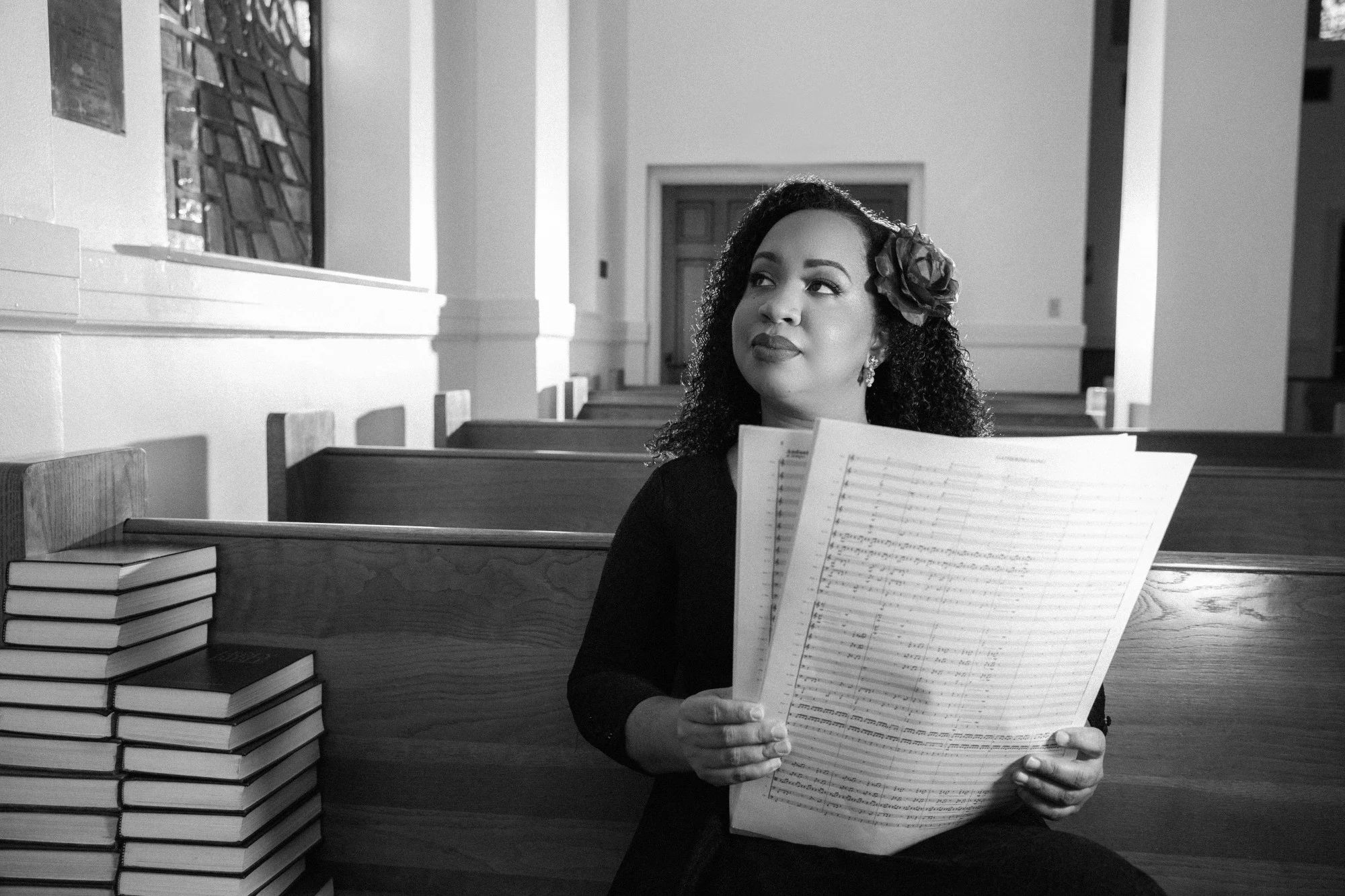
What do you find more rewarding or most difficult? I know there are those times where inspiration can be tricky.
I think some of my rewarding times after the fact were the projects that were hard for me to like sort of crack, like it was like cracking a code. I think sometimes because I’m happy when it flows and I just feel good about it: I hear it. It’s the way I pictured it, so, I’m happy about something like that.
But some of the projects that I really struggled with. Like I wrote a violin concerto for the violinist Jennifer Koh. And I had to learn, so the learning curve was very steep to write a solo violin piece in the form I was doing. Anyway, it’s just like a steep learning curve of how to write that form and write for that particular instrument. I’ve written for strings a lot, like in a group setting. But something like that took a lot to do. And so in the result, I remember the process and the starts and stops, and the edits and stuff. And I feel proud of myself for getting to the other side. And, you know, creating something that we both liked. Like I wanted to create something that she would enjoy and something that I would enjoy. And so it was successful, but it took a lot of work.
And yeah, the rewards, I mean, I feel like a piece…Sometimes there’s a part of me that’s happy just to write the piece and just know that it exists and can be performed one day.
There’s absolutely nothing that replaces having the live performance and getting to be there with the audience and hear the music for the first time.
So that’s something that’s like the best feeling. Because you’re sitting, like especially something like an orchestra piece, it’ll be something that I’ve created. And then, at a certain point, you send it in to the conductor and then it’s in the conductor’s hands at that point. And you’ve kind of done your part.
If you’re doing like this traditional way of working with orchestras, it’ll be like months between me finishing the piece and me getting to hear it, and so it’s like a delayed gratification where you sit there and your piece comes to life. There’s all these amazing musicians, and you get a chance to try out things back and forth, so that’s really like the best feeling. You’re here with the audience and you have the the world premiere, so everybody’s hearing it for the first time. That’s the most rewarding part of all of it.
How do you stay inspired? I know a lot of it is your lived experience, but I guess, what are you drawn to express in your music?
I found over time, like I just do whatever I’m interested in at the moment. But I start to see there were certain themes. Like one theme that’s always inspired my work since I was very young is my spirituality. So even the act of creating music is like a spiritual thing for me. And that’s why I also have music that I’m commissioned to write for performances, but I also love just having music that I play that’s just for me. Or just time at the piano playing other people’s music. But I use it in a certain way that I always have where it’s just like my own; it’s almost like a meditation. And sometimes I create music that I call music meditations.
But there are other themes I have. So, a spirituality theme is always in there in some way or another. And at a certain point, my music became more explicitly political. like the piece that New Haven is performing, Sanctum. And that was a special moment. It was a particular moment because I had these interests in my music, but I wasn’t doing like a piece that I would say, this is a piece that’s about this theme. And I was doing a postdoc at that time at Princeton in the African American Studies Department.
I was around people like Eddie Glaude, ImanI Perry, and all these other thinkers that were like helping me think about some of the history of what’s going on – contemporary issues and things like police brutality. And it was the start of the Black Lives Matter movement at that time in 2008. We premiered it 2015, but around like 2014, I was writing this piece.
It started off as something that was thinking about like inspiration from the sound of holiness preaching traditions. I was thinking about improvisation and preaching traditions, very certain kinds of preaching. Then as I was taking in like a lot of what was going on, especially like being on social media and seeing the images of what’s happening with police brutality, the piece and I ended up going that way.
It was both a spiritual piece and political. It was one where I was like, this is a piece about police brutality or my artistic response to it. And then that lead to other works. Like I was commissioned to write a piece in honoring Sandra Bland by the Dream Unfinished Orchestra. That was the first time I was commissioned to write a piece that was a fundraiser for social justice organizations, and so that felt very meaningful. The purpose of the concert was very intentional and writing that piece was, still to today, my largest size piece. It was for a soprano, a full chorus, and a full orchestra.
I love history, so a lot of times [the theme] might be different Black historical figures and Black diaspora. I also have pieces really focusing on women. Like the violin concerto I mentioned was inspired by three women of color artists. One was Frida Kahlo, one was Elma Thomas, and one was Maya Lin. I loved just picking artists who I liked. I didn’t know what they had in common, but I was like, here’s artists I want to create music inspired by their art. Then I found things that were in common, and I ended up calling it Syzygy because that was a term about three planetary objects in alignment. They all had work that had to do something with like planets and solar systems.
So it can come from anywhere. Like I mentioned, sometimes it’s more abstract, like it might be like certain numbers or like spiritual concepts and that that’ll be an inspiration.
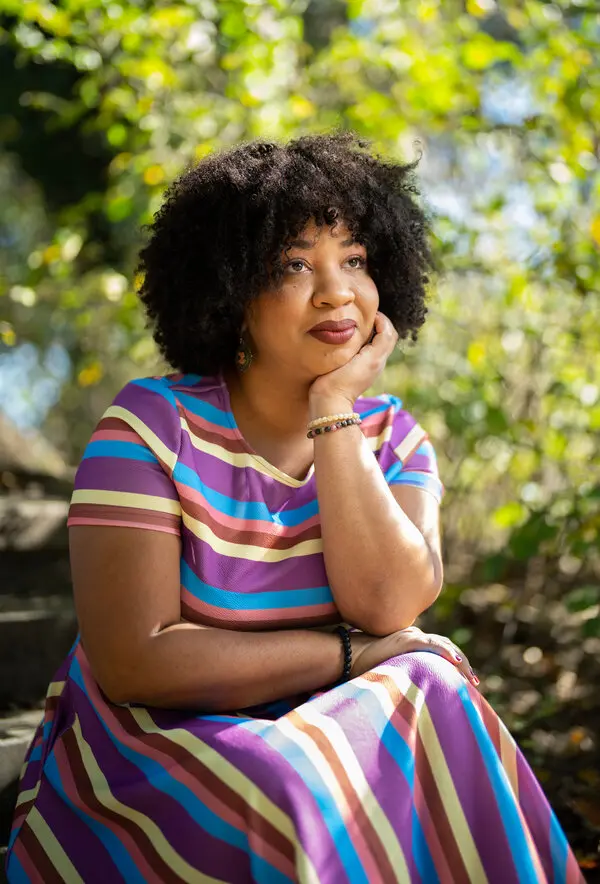
What do you hope that your audience receives from your music?
Well, my main thing is feeling like I’m always interested in what someone feels when they hear my music. I think cause that’s such a big part of it for me. Like it’s a compliment to me if people find it to be smart. Like if there’s certain things about it intellectually that are interesting, I find that it’s like a compliment. But my real goal is to like affect people emotionally.
So to just give a space where people can feel their emotions, like a piece like Sanctum. One of the things I wanted to do artistically was to take something that I would feel inclined to just numb myself away from and ignore just so I could go about my daily life. But then I think it was a chance to actually feel the feelings – to actually feel it. I feel like that’s what I was doing personally. So if an audience feels that way, then it’s, you know, a chance to feel something. Sometimes difficult emotions, but I think there’s like, you know, a healing that can come from that or like a growth that can happen from that, at least.
Well, thank you so much for sitting down and speaking with me. I am so excited to hear your piece at the New Haven Symphony Orchestra!
Thank you. And I will say I talked about difficult emotions and healing because of that piece. But I do like also to make music intentionally. Sometimes it’s about joy. Not joy as in like a distraction from hard times, but just like a pure joy. So even one of the pieces that we’re including on this concert is not my original piece. We’re doing an arrangement I have of This Little Light of Mine. I was glad when Perry still mentioned a piece to perform. I was like, “Oh! I like sharing that one because it’s one where it’s joy, but it’s joy that still is like not numbing to the difficult parts of life. But it’s also very joyful!”
This interview was edited lightly for length and clarity.
Courtney Bryan will also be performing at the NHSO concert, Goin’ Home, which will take place March 22, 2026. Click here to learn more.
Nelani Mejias is a student studying English and Arts Administration at SCSU, and interning with the NHSO.